Brand Guidelines Sized for the Company You Actually Are
A working brand-system document. Colors, typography, logo, imagery, voice. Short enough to be read, specific enough to settle arguments, and built to stay current without being a maintenance burden.
Overview
Brand guidelines fail one of two ways. They're either 80 pages of theoretical purity that nobody reads (designed for a Fortune 100, applied to a 25-person startup), or they're three slides of "here are our colors and our logo" that don't actually settle any of the questions a vendor will ask. Both versions get the same outcome: nobody opens them.
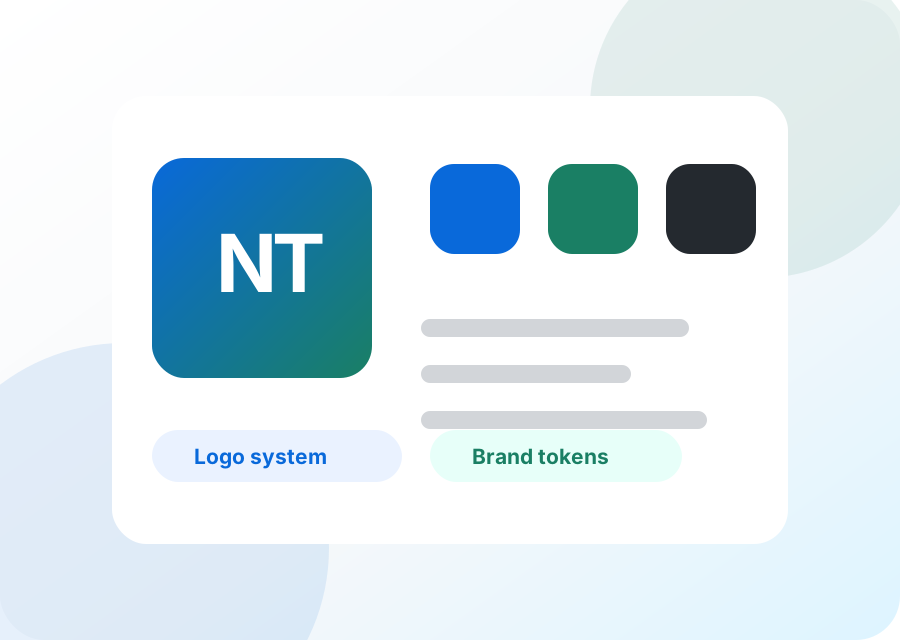
We build guidelines in the middle: typically 12 to 25 pages, structured as the questions a designer (in-house or vendor) actually has, with answers specific enough to act on. Color tokens with hex, RGB, CMYK, and Pantone. Type scale with actual sizes and the Google Fonts loading recipe. Logo usage with the don'ts the team has actually seen happen.
Output is a PDF for distribution and, on request, a web-based version (a single reference page or Notion site) that's easier to keep current and reference in a pinch.
What we mean by brand guidelines
Brand guidelines are the documented system that lets people apply the brand consistently without having a conversation with the original designer every time. They cover the things that have to be done the same way each time (logo, colors, typography, spacing, voice) and the things that have flexibility within rules (imagery, illustration, tone in different contexts).
For us, "guidelines" stops at decisions and rules. It does not include moodboards, brand pillars as inspirational headers, or vision statements that read like horoscopes. Those belong in brand strategy, not in the document a designer opens to find out what the secondary brand color is.
How we work
- System inventoryWhat's already decided (colors, type, logo) and what's still drifting (imagery, illustration, voice). The guidelines work codifies what's known and resolves what isn't.
- Resolve the open questionsWhatever isn't yet decided. Usually imagery treatment, secondary color usage, or voice. Gets a short focused decision pass before being documented. We don't document open questions and call it guidelines.
- Document draftingBuilt section by section: cover, table of contents, logo system, color tokens, typography, spacing scale, imagery treatment, voice and tone, common applications, contact for questions. PDF format with a consistent visual system.
- Review and revisionOne round of comments from your team, focused on accuracy ("the secondary color isn't right at #1769ff, it's #1875ff") rather than scope creep. Final delivered as PDF plus editable source.
- Optional web versionIf wanted, we build a single-page web reference (HTML site or Notion page) that mirrors the PDF and is easier to update as small things shift.
What's included
- Logo system with lockups and don'ts
- Color tokens (hex, RGB, CMYK, Pantone)
- Type scale with sizes and font-loading details
- Spacing and grid scale
- Imagery and illustration treatment
- Voice and tone principles with examples
- Common application examples (web, print, social)
- PDF + editable source; optional web-based version
Engagement example
A 60-person professional services firm had a one-page brand summary that didn't survive contact with a single vendor. New marketing collateral kept coming back not-quite-right; designers asked the same questions repeatedly. We produced a 19-page guidelines document covering the actual decisions the firm had made and resolving the few open ones (secondary color usage, headline imagery treatment).
Representative engagement. Client identity withheld for privacy.
Frequently asked questions
Tired of vendors asking the same brand questions?
Tell us what you have today (a one-pager, an old PDF, nothing). We'll scope a working guidelines document that actually settles those conversations.